Friday, September 23, 2011

Why Butter is better cooking medium?

Butter is the fat of the milk made from sweet cream. It may be sweet (unsalted) butter or salted. Traditionally the butter is made from the cream that has been allowed to stand and sour naturally. The cream is then churned to produce butter. Commercially cream is separated using mechanical cream separators. It is then allowed to ferment under controlled conditions. The butter is the natural fat as component of milk and is produced by the cattle (Cow). The main constituents of the salted butter are fat (80-82%), water (15.6-17.6%), salt about 1.2%, as well as proteins, calcium and phosphorous about 1.2%. It also contains fat soluble vitamins A, D and E. The butter is not pure fat, it is an emulsion. Butter must be handled with utmost care than other fats. Warm butter can be chilled again. Milk solids in butter, burn at low temperature (121 C), and as such butter is not a useful cooking medium. To use butter as a cooking medium, it is heated at low temperature, till butter fat and milk solids separate. The butter fat is then poured off and used as cooking medium. However the distinct flavor of the butter is in the milk solids, so the clarified butter lacks the flavor and taste of the melted butter. Butter is the only fat that is produced by live cattle, unlike other animal fats, where cattle have to be slaughtered in order to produce fat. Butter blends beautifully with sugar and as such is the star of desserts. 

Over the years, our diet has undergone a sea change. We are constantly being reminded, of the fact, that low fat diet is healthy. But as we reduce our fat intake we proportionately increase intake of sugars and carbohydrates. We have substituted fake man made fats with that of animal fats. This has resulted in rise in obesity and diabetes. Fat actually does not make us fat. The good animal fats like butter, is very satisfying preventing cravings for snacks and from over eating. The low fat diet, on the other hand, leaves us hungry, depressed and prone to illness. We forget that fat and proteins are satisfying whereas starch and sugars’ lead to craving and weight gain. Fat is an important cooking ingredient. It is difficult to cook without fat. Fat helps the food to brown nicely, cook evenly and to keep it succulent. Fat is an excellent carrier of flavors. Animal fats are low in polyunsaturated fatty acids. They are best fats to be used in kitchen. They are stable and when heated, don’t turn rancid. Most aromas and flavors are soluble in fat, so unless fat is used in cooking, the flavors are not released.
Highly poly unsaturated fatty acids are unstable. They are not suitable for cooking as when heated they get oxidized. The oxidized fats are harmful. They make us sick and damage DNA of our cells. They also suppress immune system. When poly unsaturated fats are hydrogenated they become full of transfats.
All of us need essential fatty acids to keep us healthy. Using large amounts of poly unsaturated fatty acids, results in increased intake of Omega 6 fatty acid. Increased intake of Omega 6 fatty acid decreases the intake of Omega 3 fatty acid. Low levels of Omega 3 fatty acid can result in cancer, liver damage, learning disorder, weight gain and malfunctioning of the immune, digestive and reproductive systems.
We all need plenty of Omega 3 fatty acid and it is naturally found in the butter and fat from other herbivorous(grass eaters) animals.

Thursday, February 10, 2011

How to relieve stress?


One can achieve a balanced existence with a calm mind, high concentration, an energized body, mind and spirit, all round success and well being, by arming oneself with spiritual techniques and philosophies, to face the battle of life. Unlike previous generations, the present generation, does not wait for the problems to overpower them before seeking spiritual solace for health, relationships and career. The path of spirituality is not only about self realization or realization of God but it leads down to success in all spheres of life and finally enlightenment.


Younger generation cheerfully accepts and warms up to the religious teachings. Present day Gurus and organizations offer spiritual cure by teachings/techniques which have been modified to suit the needs of the present day devotes. The techniques are not restricted to any particular culture, sect or religion but are open to all and these work like a magnet for the younger generation.


Spiritual wellness necessarily is not about searching for God, it is answer to all the problems and tensions of life. GenX, mostly, joins these organizations out of curiosity or peer pressure or their desire to do something new. Most join with a fixed purpose or aim in mind and are not afraid to try out new approach to life.


In present day fast life stress is the major problem. Youngsters are more vulnerable to stress. Stress may be due to peer pressure, pressure to perform well academically, adolescent body changes, emotional and social adjustments. Stress increases temptations of drug abuse and tendency to suicide. Spirituality can help to relieve stress.


Spirituality not only relives stress but also leads on to the path of positivity and clarity by deep concentration. Concentration helps to increase energy level, Negativity, confusion, fear, shyness hypersensitivity and anger. Spiritual wellness lets you experience “Dynamism from outside and calmness from inside”.


As physical body requires nourishment so the mind and spirit requires energy. This energy is provided by ‘Dhyana’ and ‘Parnayama’ which keeps the spiritual battery charged. Dhayana and pranayama require regularity and needs to be performed morning and evening.

Thursday, December 30, 2010

A VERY HAPPY AND EVENTFUL PROSPEROUS NEW YEAR 2011


www.365greetings.com


WISH ALL MY FRIENDS AND VIEWERS OF MY BLOG
"A VERY HAPPY AND EVENTFUL PROSPEROUS NEW YEAR 2011"

Friday, August 13, 2010

Infertility in Women

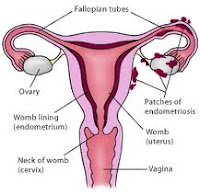
Endometriosis is a wide spread present day common medical condition that plagues some 85 million women across the globe. Endometriosis is characterized by chronic abdominal pain, painful menstruation, painful intercourse, painful urination, vomiting and nausea. In India, Endometriosis affects one in every ten women. It is the main cause of infertility in women, denying them the privelage and joys of motherhood.

Endometriosis is a condition in which cells similar to one’s inside the uterus start multiplying, out side the uterus. These cells interfere with the working of the ovaries, ovulation and implantation of the embryo, rendering women infertile. Endometriosis is a life long disease and the incidence is high in the women, who use contraceptive pills for a long period. Though the exact cause is not known but delayed preference for motherhood is one of the main reasons.

The disease is seldom diagnosed in the early stages as the symptoms appear to be yhe normal mensturational problems. It gets ignored and women popup over the counter pain killers to ease out the pain. Painful periods, bowl movement, low back pain and fatigue, are other symptoms which shoul not be ignored.

Urban women are more prone to Endometriosis, as they delay the pregnancy due to late marriage or life style. Endometriosis is known as antipregnancy disease because it has a negative effect on ovulation and implantation of the egg.


Leproscopy is the most popular treatment to treat Endometriosis in young women. They are required to undergo surgery and invitro fertilization(test tube baby). In the older women a total hysterectomy is the only solution.

The best way to avoid endometriosis is to follow the nature’s way and not to delay pregnancy. The rigours of pregnancy, absence of menstruation during pregnancy, breast feeding and other hormonal changes, all prevent Endometriosis. Late pregnancies result in prolonged flow of estrogen, uninterrupted by pregnancy, provide a fertile ground for the abnormal growth of endometrial lining. A healthy and stress free life style alongwith early pregnancy is the best way to prevent Endometriosis.

Thursday, August 12, 2010

Why Flax is a Super food?

Flax seeds are rich in Omega 3 fatty acids – a key force against inflammations causing many chronic ailments like arthritis, asthma, diabetes, some kinds of cancers and even heart disease. Most of the oil in flax seed is alpha linolenic acid (ALA). ALA is an Omega 3 fatty acid which is a precursor to fatty acids, found in cold water fish, called EPA and DHA. ALA along with Omega 6 fatty acids, found in corn and soya oils, can help to maintain the ratio of both Omega 3 fatty acids and Omega 6 fatty acids, in vegetarians or persons who do not consume fish. Consuming more of Omega 3 fatty acids helps to lower the risk of heart attack, lowers BP and Cholesterol. Flax oil has 50% more Omega 3 fatty acids compared to 10% in Walnut and canola.

The Flax seed carries one of the best nutrient content compared to its size. Flax seeds contain a good amount of minerals, vitamins, quite large amounts of fiber, antioxidants and Omega 3 fatty acids. It is low in carbohydrates and its combination of healthy fats and high fiber content make it an ideal food for weight loss and maintenance

Flax seeds are commonly known as Alsi seeds. It belongs to Lineacae family. It is a native of Mediterranean and India. It is an annual herb with pale blue flowers. It was extensibly cultivated in ancient Ethiopia and Egypt. Dyed flax fibers have been found from the caves in the Republic of Georgia, dating back to 30,000 BC.

Flax is an annual herb. It is grown for its seeds and fibers, Flax seeds are of two varieties- Brown and Yellow or Golden.
Most varieties have similar nutritional characteristics and equal amounts of Omega 3 fatty acids (short chained fatty acids). The yellow variety is, called solin (traded as Linola), low in Omega 3 fatty acids. The oil of the yellow variety has a different profile. It is better known as an ingredient in paints, fibers and cattle feed. Flax seeds produce a commercial vegetable oil called ‘Linseed Oil’. It has been used for centuries as a drying oil in paints and varnishes.

Flax seeds are edible. They are roasted and grounded and then used as food supplement. Roasted and grounded flax seeds known as ‘Tisi’ in Bihar region, are eaten along with rice, a little of water and salt. Flax seeds are chemically stable and can be stored for a year at room temperature. However grounded flax seeds need to be refrigerated to prevent from going rancid.

Fax seeds contain a high level of fiber, both soluble and insoluble. The dietary fiber helps to lower cholesterol, especially in women. Flax seeds can be used as laxative due to its dietary fiber content though excessive consumption without adequate liquid can cause bowl obstruction. Consumption of large amounts of flax seeds may interfere with certain oral medication. Flax fibers are also obtained from the stem. The flax fiber obtained from the stem is soft, lustrous and flexible. It is stronger than cotton but less flexible. Best grade fibers are used for making linen fabrics, coarser grades for twines and ropes. It is also the raw material for high quality paper, used for printing currency notes and also for making tea bags and rolling paper for cigarettes. 1/4th cup of flax seeds provides 6 gms of soluble fiber. Studies have shown that when flax seed powder is added to diet, harmful LDL cholesterol level drops significantly.


Flax seeds are rich in chemicals including many antioxidants. It is the best source of lignan which are potent antioxidants that help to eliminate harmful free radicals. Lignans are converted in the intestine to hormone like substances called enterolactone and enterodiol. Evidence suggests that lignans may promote fertility, reduce premensturational symptoms and possibly help to prevent breast cancer and type 2 diabetes. Vegetarian diet is one of the reasons, of lower incidence of breast cancer in the vegetarians.


Flax seeds are good source of most of the B vitamins, magnesium and manganese. Vitamin B helps to keep the nervous system healthy whereas magnesium and manganese help to reduce the severity of asthma and to lower blood pressure reducing risk of heart attack and stroke.


Big fiber load, resistance to rancidity (oxidation) of flax oil and hormonal effects of lignans has invoked a renewed interest in the nutritional value of flax seeds.

However care should be taken
  • Not to eat whole flax seeds as they are extremely hard to digest. The need to be roasted and grounded before use.
  • Only 2 to 4 tablespoons should be consumed as they contain very small amounts of cyanide compounds. Heat, especially on dry seeds, breaks these compounds.
  • Avoid eating raw seeds.
    Flax seed powder can be mixed with a wide range of foods – like curds, can be used as salad dressing, mixed with wheat flour to bake bread, muffins or other products. It can also be added to porridge or milk.